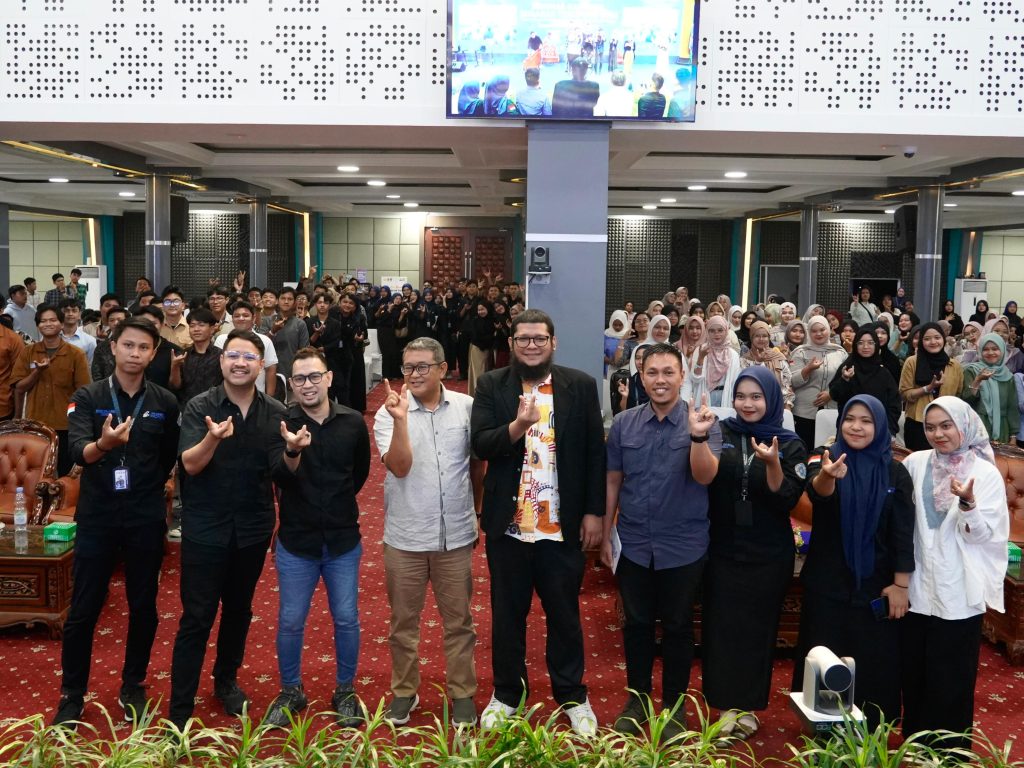
Indonesian Youtuber Jovial Da Lopez attended Universitas Muhammadiyah Sumatera Utara (UMSU) as one of the speakers at the Semarak Teropong 2024 National Seminar, held on Saturday (26/10) at the UMSU Auditorium on Jalan Muchtar Basri No.3 Medan.
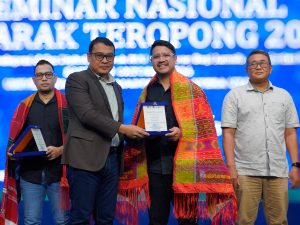 The national seminar entitled ‘Freedom of Expression in the Digital Age, the Impact of the Broadcasting Bill on Journalists and Content Creators’ also presented speakers from the North Sumatra Regional Indonesian Broadcasting Commission (KPID), Anggia Ramadhan, Deputy Chief Editor 1 of Analisa Daily, Rizal Rudi Surya to the lecturer of the Faculty of Law, Taufik Hidayat Lubis, S.S., S.H., M.H..
The event was opened directly by the Rector of UMSU, Prof. Dr. Agussani, MAP, represented by WR 3 Assoc. Prof. Dr Rudianto, M.Si. In his remarks, Assoc. Prof Rudianto expressed his hope that such discussion activities can continue and contribute to shaping the future of journalists and content creators in Indonesia.
He emphasized the importance of freedom as the key to creativity, especially in the current digital era.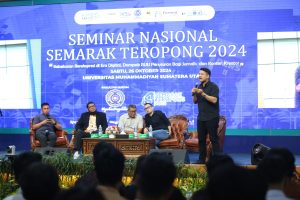
‘We must see broadcasting not just as an industry but as part of freedom of expression and democracy,’ said WR 3.
He added that excessive control through laws could threaten the creativity of content creators. At the same time, the ideal of journalism needs to be more noticed by some content creators pursuing popularity.
Then Jovial Da Lopez, who was present as a representative of content creators, gave his views on the ‘No Viral No Justice’ phenomenon in Indonesia. According to him, this phenomenon is concerning because people tend to solve problems publicly through viral content, instead of leaving it to the authorities.
‘In my opinion, today’s content creators are less creative, and I’m honestly annoyed for the ‘no viral no justice’ phenomenon. Because it’s as if the public has to solve the country’s problems when it should be those in authority who see and act,’ said Jovial.
He also shared his experiences during his career on YouTube, including when he represented Indonesia in international events. Jovial shared his observations of viral content in Indonesia, such as the giveaway content that has been popular over the past two years. According to him, this raises concerns because when he shared this with Japanese content creators, they refused to follow the viral trend in Indonesia because, in their opinion, it is not something to be proud of.
‘Japanese content creators respond that people don’t do things like this in Japan, and it’s not something to be proud of. I hope we can all grow and mature more from this phase,’ he continued.
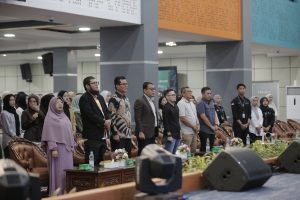 The seminar, hosted by Teropong UMSU Alumni Nirwansyah Sukarta, was previously sparked by Faculty of Law lecturer Taufik Hidayat Lubis, who explained the urgency and challenges of the broadcasting bill. Taufik considered that the new Broadcasting Bill needs to balance freedom of expression and regulations that govern broadcasts so as not to inhibit creativity.
Anggia Ramadhan from KPID North Sumatra added that the main purpose of the new Broadcasting Bill is to adapt the regulation to the times, improve broadcast quality, and create a conducive climate for industry players. She believes that a more adaptive and conducive regulation can open opportunities for content creators and the broadcasting industry to be more innovative and creative.
The event attracted enthusiasm from students, academics, and local content creators who attended. The Semarak Teropong 2024 National Seminar is expected to provide new insights and understanding about the importance of freedom of expression and the challenges faced by content creators and journalists amid the development of the digital era.
Also present were the Dean of the Faculty of Law, Assoc. Prof. Dr Faisal, S.H., M. Hum, and the Vice Deans, the Teropong Alumni Forum (Format) throughout UMSU, the management of UKM Teropong, and the seminar participants.