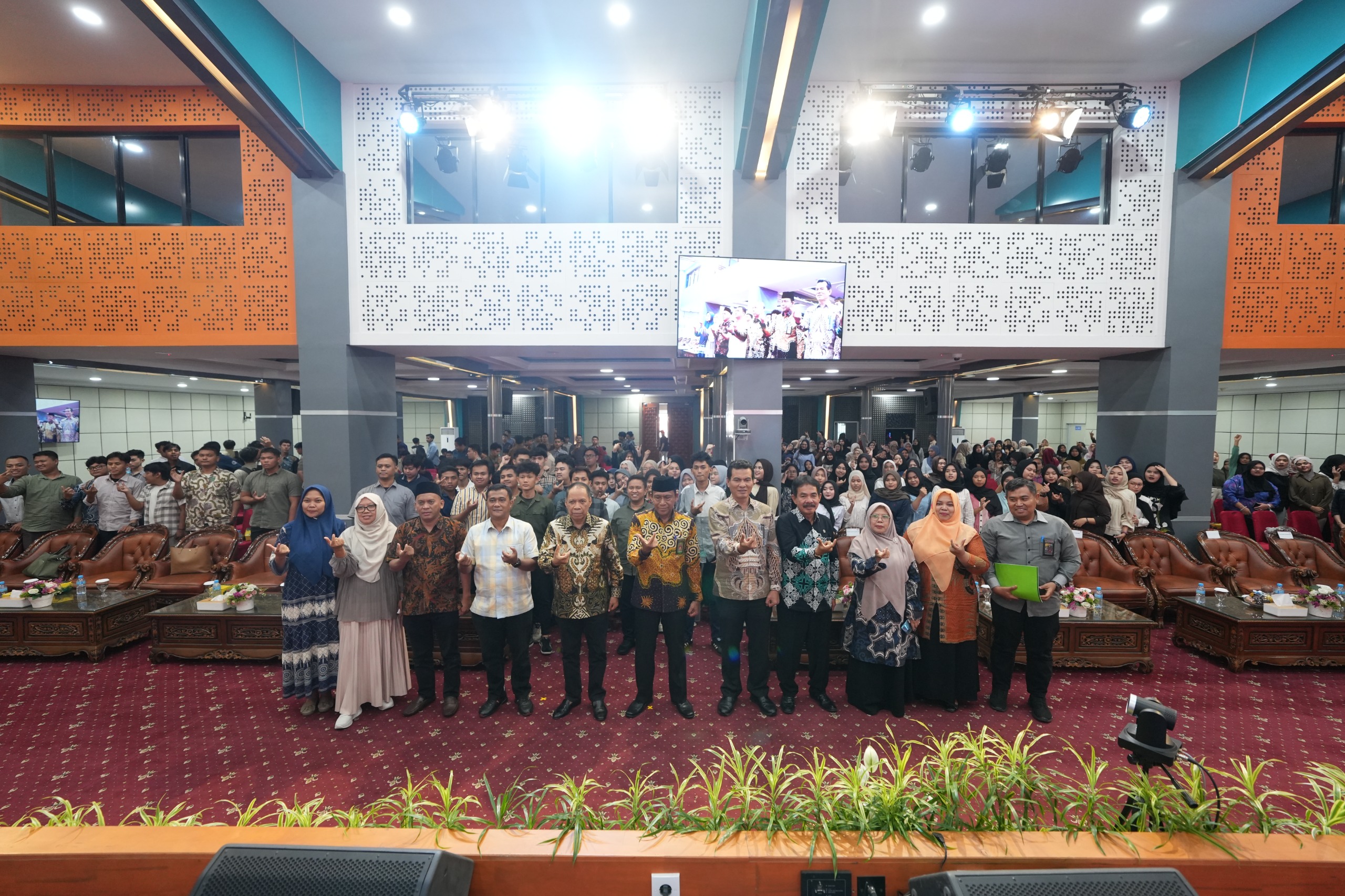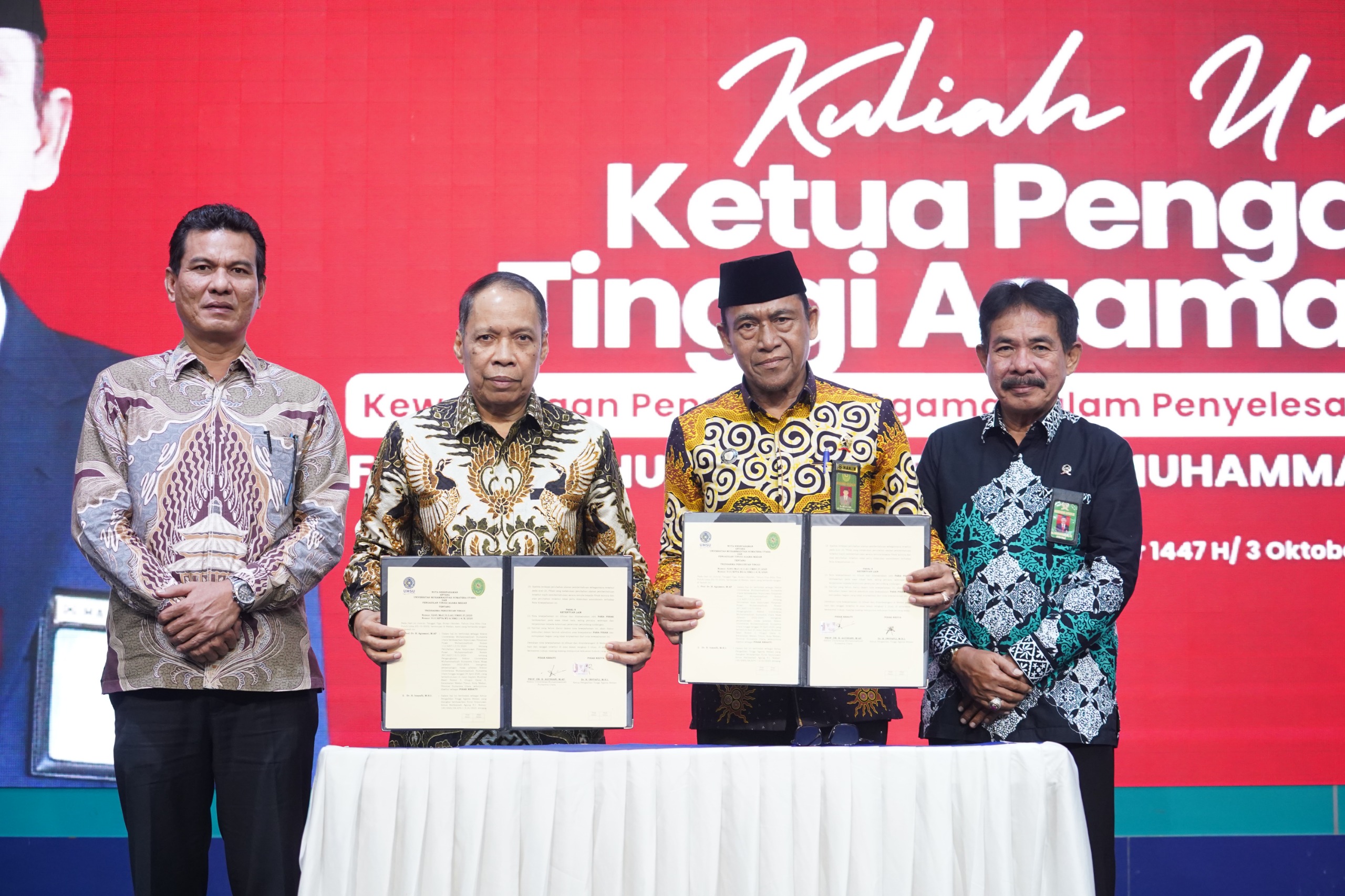
Universitas Muhammadiyah Sumatera Utara (UMSU) and the High Religious Court (PTA) of Medan signed a Memorandum of Understanding (MoU) on the Tridharma of Higher Education. The signing ceremony was held alongside a public lecture by the Faculty of Law themed “The Authority of Religious Courts in Resolving Sharia Economic Disputes” on Friday (3/10) at the UMSU Auditorium, Jalan Muchtar Basri No. 3, Medan.
 The MoU was signed directly by UMSU Rector Prof. Dr. Agussani, MAP, and the Chief of the Medan High Religious Court, Dr. Insyafli, M.H.
UMSU Rector Prof. Dr. Agussani, MAP emphasized the importance of collaboration between universities and judicial institutions.
“We are grateful that the Faculty of Law actively builds partnerships. It’s not only about classroom learning, but also providing students with practical insight,” he stated.
According to Prof. Agussani, the public lecture is part of ongoing efforts to enhance academic quality while opening opportunities for research in Sharia economic law. He also expressed hope that the long-standing cooperation with the Medan High Religious Court—established in 2001—will continue to grow and be effectively implemented.
Previously, the Dean of the Faculty of Law, Assoc. Prof. Dr. Faisal, S.H., M.Hum., explained that the partnership with PTA Medan is highly strategic, especially for the student legal clinic programs.
“We want students to understand that the authority of the Religious Court goes beyond divorce cases. It also includes resolving Sharia economic disputes,” Faisal noted.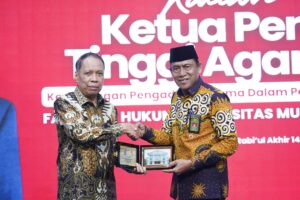
Dr. Faisal added that each year, law students participate in legal clinic activities at the Religious Courts of Medan, Lubuk Pakam, and Binjai. In the future, they hope to expand these activities to other regions.
During the public lecture, Chief Judge Dr. Insyafli, M.H. highlighted that many people still do not fully understand the role of the Religious Court, particularly regarding Sharia economic matters.
“Some still assume that the Religious Court only handles marriage and divorce. However, since Law No. 3 of 2006, its authority covers inheritance, waqf, gifts, and Sharia economic disputes. Today, Sharia economic cases can even be resolved under the small claim procedure for cases valued up to IDR 500 million, with decisions issued within a maximum of 25 days,” he explained.
He also revealed that throughout 2024, only 23 Sharia economic cases were filed across 22 Religious Courts in North Sumatra.
“This means, on average, each court handles only one case a year. Perhaps the number of disputes is truly low, or maybe they are settled outside the courts. If people comply with the law and disputes are minimal, this is certainly good news,” he added.
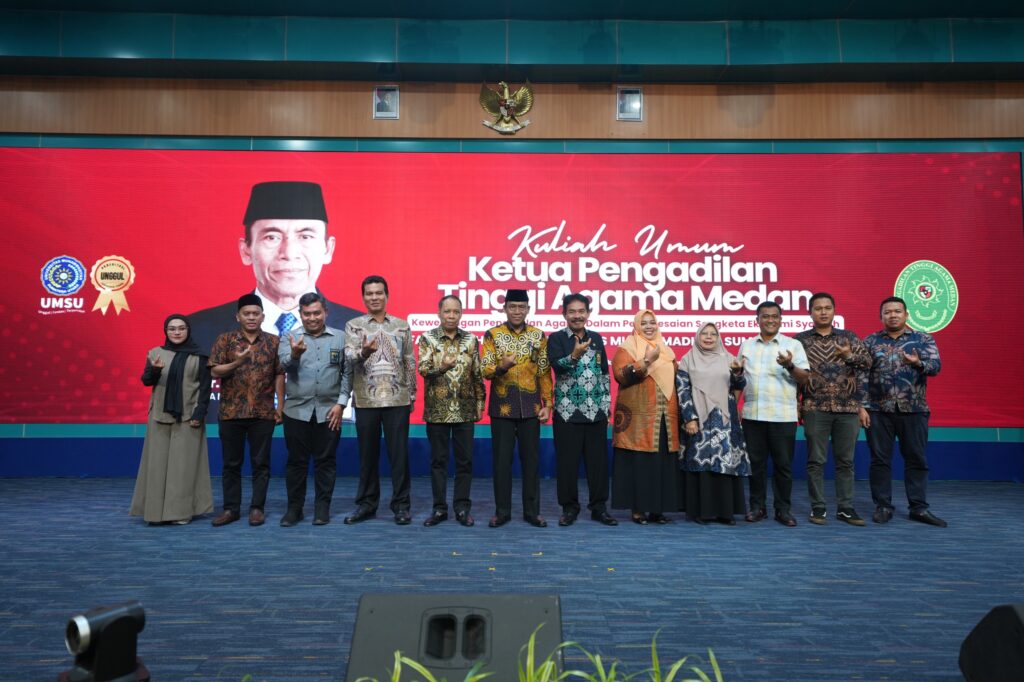
The event concluded with the exchange of souvenirs from the UMSU Rector to the Chief of the Medan High Religious Court, witnessed by faculty leaders, lecturers, students, and officials from the judiciary. The collaboration is expected to strengthen students’ understanding of Sharia economic law and serve as a platform for research development in the field of religious judiciary.
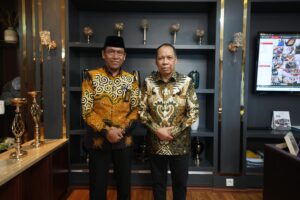 Also present were Senior Judge of the Medan High Religious Court, His Excellency Drs. Ahmad Sobardi, S.H., M.H.; Head of the Program Planning and Budgeting Subdivision, Muhammad Syahrur Ramadhan, S.H., M.H.; Chief of the Stabat Religious Court, Dr. Hj. Sri Armaini, S.H.I., M.H.; Dean Assoc. Prof. Dr. Faisal, S.H., M.Hum.; Vice Deans; Heads of UMS Units; lecturers; and students from various semesters of the Faculty of Law.