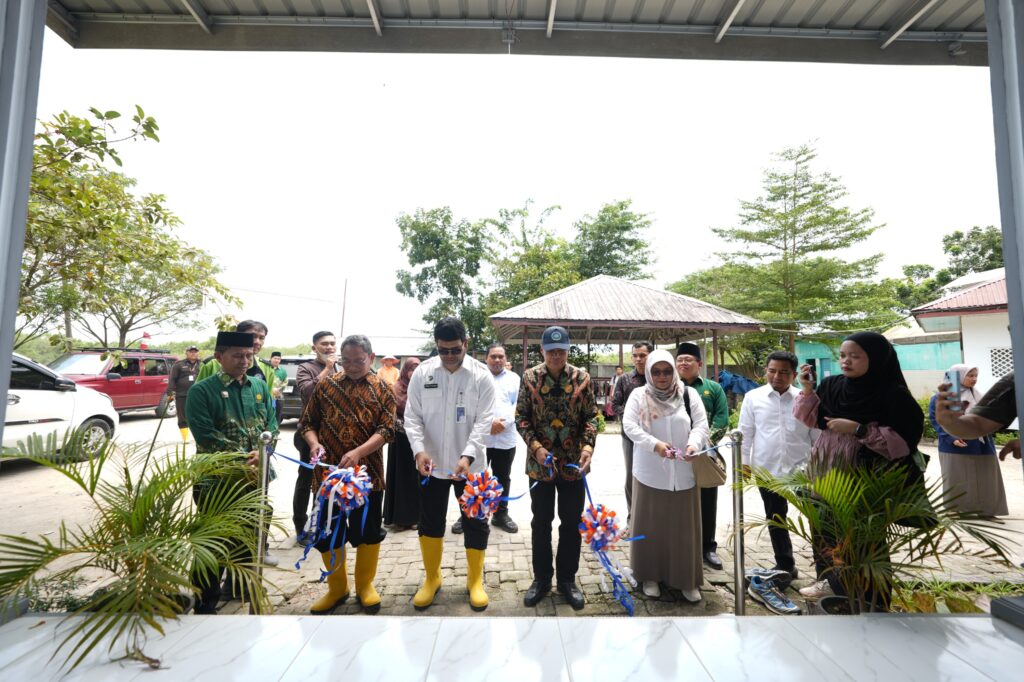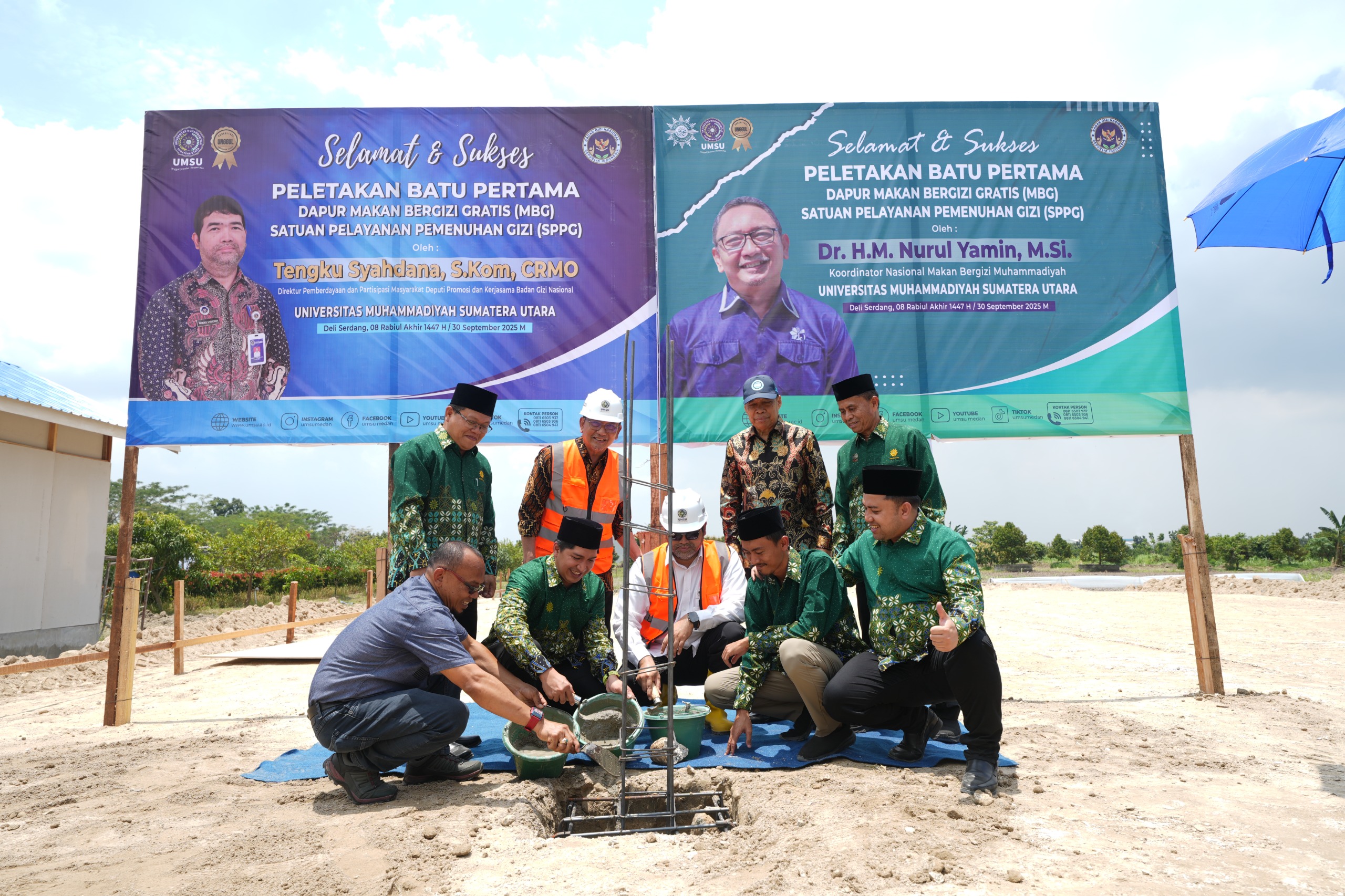
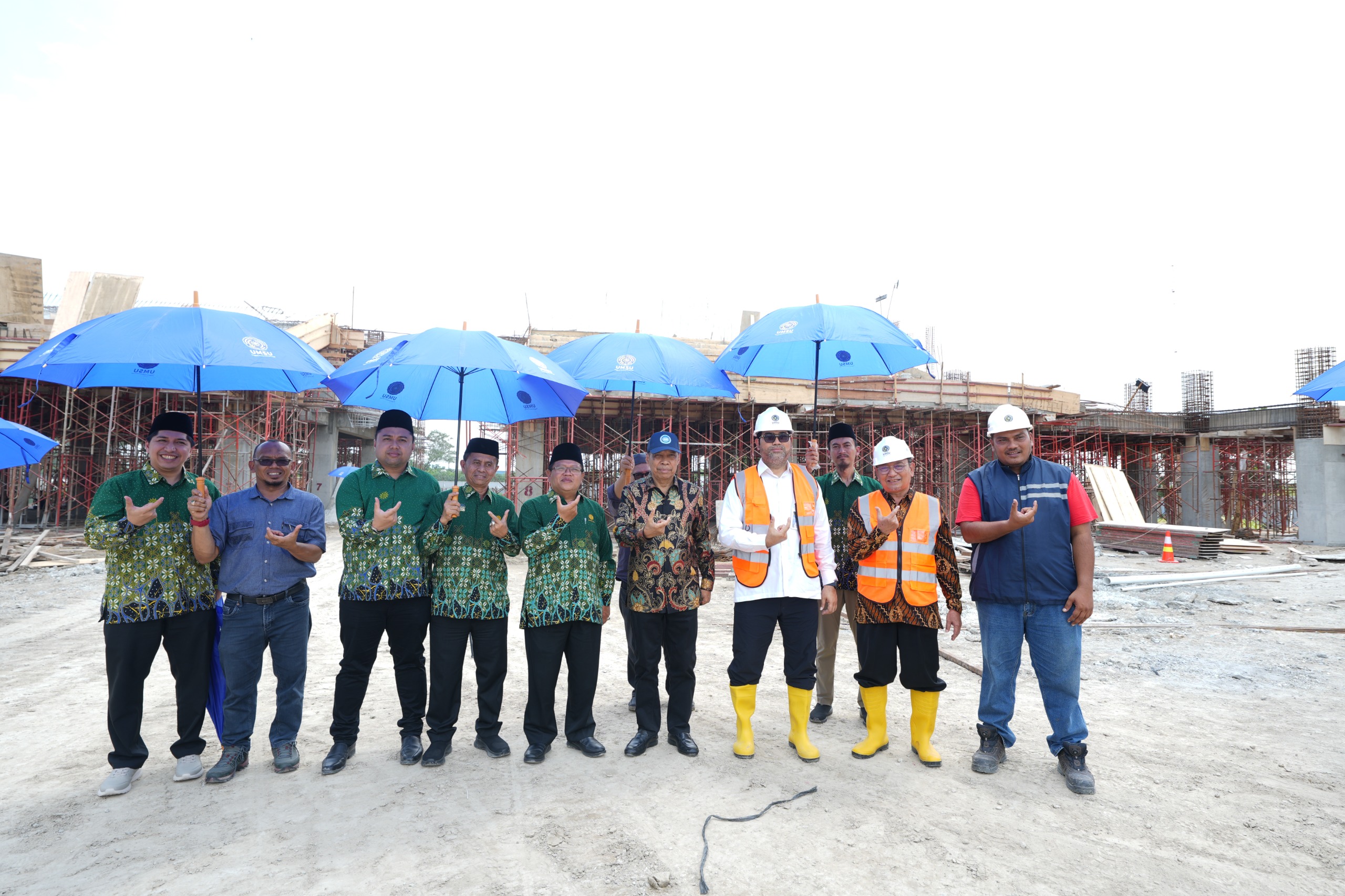
The Director of Community Empowerment and Participation of the National Nutrition Agency, Tengku Syahdana S.Kom, CRMO, led the groundbreaking ceremony for the construction of the Muhammadiyah Nutrition Fulfillment Service Unit (SPPG) kitchen managed by Universitas Muhammadiyah Sumatera Utara (UMSU) on Tuesday (30/9) at UMSU Campus IV in Sampali Village, Deli Serdang. Joining him were the Chair of the Muhammadiyah Community Empowerment Council (MPM) PP Muhammadiyah, Dr. Nurul Yamin, M.Si; UMSU Rector, Prof. Dr. Agussani, MAP; Secretary and Deputy Secretary of the Muhammadiyah Regional Board of North Sumatra (PWM Sumut), Irwan Syahputra, MA and Mutholib, MM; as well as the Regional Coordinator of MBM, Muhammad Irsyad.
 The Free Nutritious Meal Program is one of the government’s strategic initiatives to meet nutritional needs for groups such as students, pregnant and breastfeeding mothers, and children experiencing stunting. In 2025, the government aims to provide nutritious meals to 82.9 million students, pregnant women, and toddlers.
To support this initiative, the National Nutrition Agency is expanding the number of SPPG units in various regions while conducting educational outreach with community groups, including Muhammadiyah leaders across North Sumatra. A coordination meeting between the National Nutrition Agency and the Muhammadiyah Regional and District Boards took place at the UMSU Auditorium on Jalan Muchtar Basri, Medan.
After the meeting, the Director of Community Empowerment and Participation, Tengku Syahdana; Chair of MPM PP Muhammadiyah, Dr. Nurul Yamin; UMSU Rector, Prof. Dr. Agussani; and the Secretary of PWM Sumut proceeded with the groundbreaking ceremony for the SPPG kitchen in the UMSU complex.
Tengku Syahdana expressed appreciation for the involvement of Muhammadiyah North Sumatra in the government’s nutritious meal program. He hopes the collaboration between Muhammadiyah and UMSU will serve as a model for effective management of community-based nutrition services.
He emphasized that the groundbreaking of the SPPG Nutritious Meal Kitchen at UMSU is a significant milestone, especially as UMSU has strong potential to build a complete ecosystem—from food availability to supply chains—ensuring the program is well implemented.
Syahdana also visited UMSU’s agricultural land, which produces various vegetables, fruits, and rice. He praised UMSU’s readiness to support Muhammadiyah’s Nutritious Meal Program (MBM). “What’s interesting is that UMSU involves the local community as part of local wisdom,” he noted.
Three Pillars of Muhammadiyah’s Nutritious Meal Program
During the event, the Chair of the Muhammadiyah Community Empowerment Council (MPM) PP Muhammadiyah, Dr. Nurul Yamin, M.Si, welcomed the groundbreaking of the SPPG kitchen, which will become the foundation of the Muhammadiyah Nutritious Meal Program (MBM) in North Sumatra.
According to him, MBM will greatly benefit children, pregnant women, breastfeeding mothers, toddlers, and stunted children. It will also stimulate the national economy.
He explained that the MBM program is built on three main pillars:
-
Food Safety — ensuring a consolidated supply chain from upstream to downstream.
-
Professional and Trustworthy Governance — effective and accountable program management.
-
Integrated Ecosystem — harmonizing all processes from raw material procurement to safe distribution.
Nurul Yamin is optimistic that the UMSU SPPG MBM will become a leading example for other Muhammadiyah SPPGs across North Sumatra. Currently, the MBM program has 30 operational SPPGs, 200 more in progress for launching, and is targeted to reach 230 nationwide this year.
UMSU Ensures Food Supply Availability
 UMSU Rector, Prof. Dr. Agussani, MAP, expressed appreciation to the National Nutrition Agency for supporting the Muhammadiyah Nutritious Meal Program through the groundbreaking of the SPPG kitchen. He hopes this initiative, starting at UMSU, will serve as a model for similar programs within Muhammadiyah in North Sumatra.
“UMSU is fully ready to manage the Muhammadiyah Nutritious Meal Program,” he affirmed.
According to the Rector, the availability of essential commodities—particularly horticultural products managed by the Faculty of Agriculture—will ensure a secure supply of raw materials. “I am pleased that the Director of Community Empowerment and Participation at the National Nutrition Agency is satisfied with the field conditions,” he added.
Currently, UMSU’s Faculty of Agriculture manages eight hectares of land dedicated to cultivating various food crops, which will become a major supply source for the UMSU SPPG MBM.