


UMSU Showcases Sustainability Initiatives at the Global Sustainable Development Congress
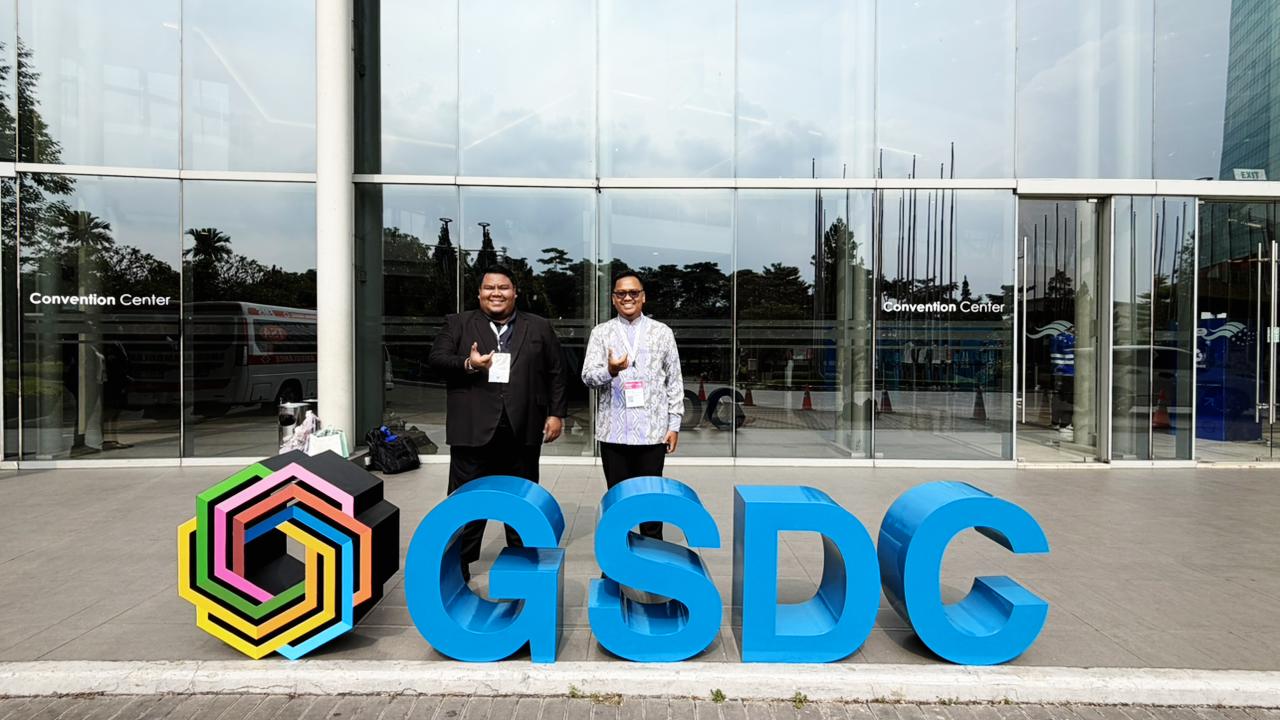
Universitas Muhammadiyah Sumatera Utara (UMSU) participated in the Global Sustainable Development Congress (GSDC) 2026, held from June 22–25 at the Indonesia Convention Exhibition (ICE) BSD City, Jakarta.
The congress brought together higher education institutions, industry leaders, government representatives, and international organizations from around the world. UMSU joined several leading Muhammadiyah and ‘Aisyiyah Higher Education Institutions (PTMA) in a shared exhibition booth to showcase best practices and success stories in implementing sustainable development initiatives.
UMSU’s participation in this prestigious global forum reflects the university’s strong commitment to advancing the Sustainable Development Goals (SDGs) through education, research, community engagement, and strategic partnerships.
UMSU Rector, Prof. Dr. Akrim, M.Pd., expressed his appreciation and full support for the university’s participation in the Global Sustainable Development Congress 2026. He stated that UMSU’s presence at the international forum represents a strategic step toward strengthening its global reputation while demonstrating the tangible contributions of higher education to sustainable development.
“UMSU is committed to providing higher education that creates meaningful impact for society. The SDGs are not merely a set of targets; they have become a guiding spirit that shapes our education, research, community service, and institutional governance. Participating in the Global Sustainable Development Congress 2026 provides a valuable opportunity for UMSU to share its experiences while expanding international collaborations for a more sustainable future,” said the Rector, accompanied by Vice Rector III, Dr. Rudianto, M.Si.
He further emphasized that UMSU’s achievements in various international rankings are the result of the dedication of its entire academic community in building a university that is academically excellent, globally competitive, and socially impactful.
UMSU was represented by Mhd. Shareza Hafiz, M.Acc., and Agus Sani, M.Sc., who served as the university’s Ranking PIC and Co-PIC, respectively. They introduced UMSU’s flagship programs, institutional achievements, and sustainability initiatives to international delegates and visitors from various countries.
At its exhibition booth, UMSU presented a series of inspiring success stories highlighting the real impact of the university’s implementation of the Three Pillars of Higher Education (Tri Dharma Perguruan Tinggi). Featured initiatives included campus internationalization, community service programs, community economic empowerment, cross-border collaborations, educational quality enhancement, and a wide range of green campus initiatives.
For UMSU, the SDGs are more than an international ranking framework—they have become an integral part of the university’s academic culture and learning ecosystem. Sustainability principles have been embedded throughout teaching and learning, research, community engagement, and institutional governance.
This commitment has been further recognized through UMSU’s inclusion once again in the Times Higher Education (THE) Impact Rankings 2026, a global ranking that evaluates universities based on their contributions to achieving the Sustainable Development Goals. This achievement reinforces UMSU’s position as one of Indonesia’s leading universities, consistently generating positive societal impact through education, research, innovation, and community service.
UMSU’s participation alongside other Muhammadiyah and ‘Aisyiyah Higher Education Institutions (PTMA) in the Global Sustainable Development Congress 2026 marks an important milestone in demonstrating the contribution of Muhammadiyah higher education to the global community. In line with its vision, “Excellence in Building Civilization,” UMSU remains committed to becoming a university that not only produces high-quality graduates but also serves as a catalyst for addressing sustainable development challenges at the local, national, and global levels.


