


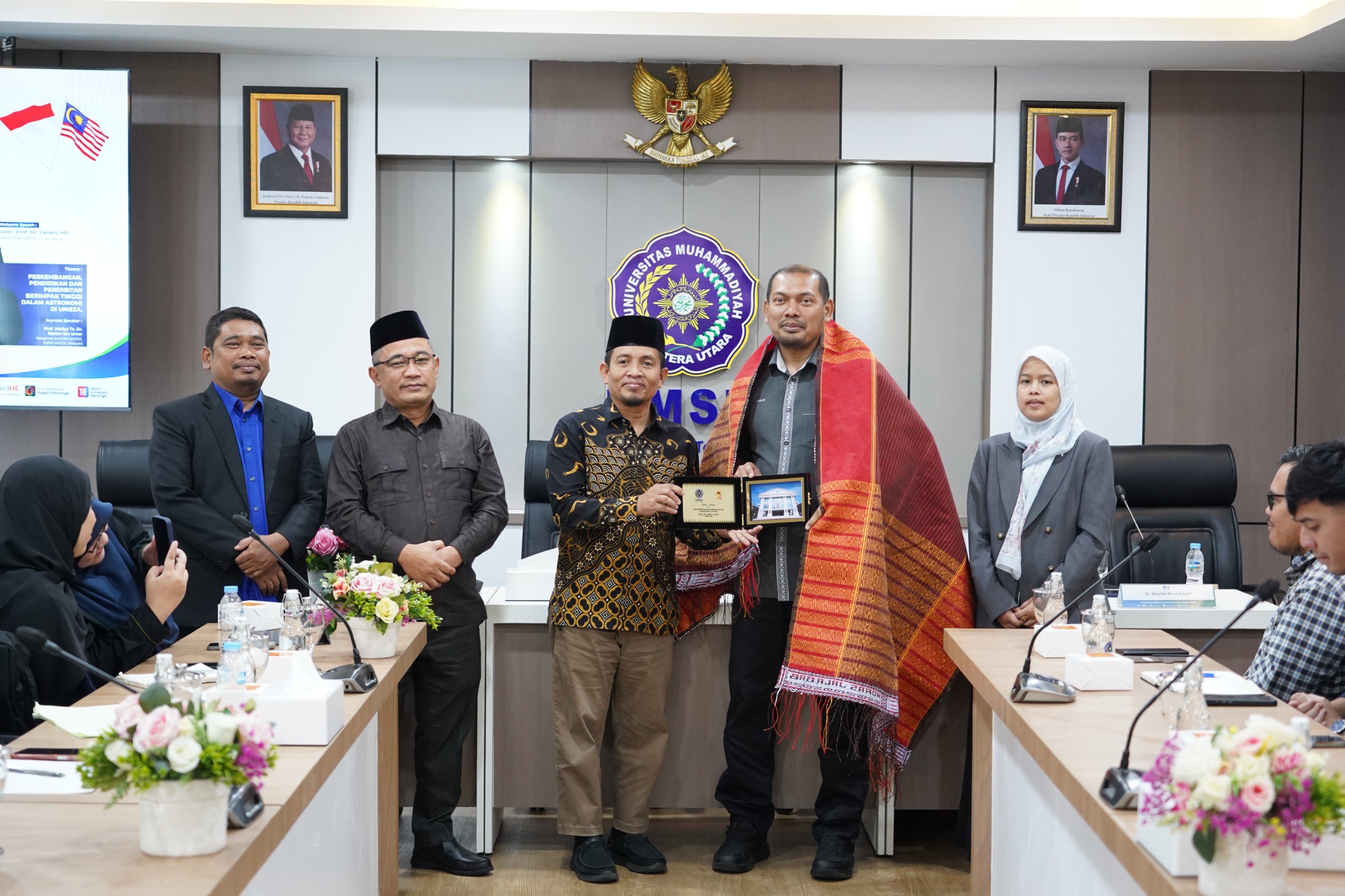
The Falak Science Observatory (OIF) at Universitas Muhammadiyah Sumatera Utara (UMSU) and Universiti Sultan Zainal Abidin (UniSZA), Malaysia, held the International Islamic Astronomy: Joint Falak Research Symposium for Academics and Students on Friday (October 16) at UMSU’s Main Campus on Jalan Muchtar Basri No. 3, Medan.
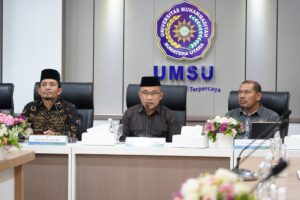 The symposium, themed “Learning, Innovation, and Network of Knowledge,” was officially opened by UMSU Rector Prof. Dr. Akrim, M.Pd., represented by Vice Rector for Al-Islam and Kemuhammadiyahan (AIK) and Development, Education, and Digitalisation (PDD), Assoc. Prof. Dr. Marah Doly Nasution, S.Pd., M.Si. He said the event reflected the Faculty of Islamic Studies (FAI) UMSU’s commitment to expanding the internationalisation of higher education.
“Falak science is a strategic field that deserves further development in Indonesia. Graduates must therefore possess not only religious knowledge but also astronomical competencies relevant to scientific advances and community needs,” he said.
The Vice Rector also highlighted opportunities for collaborative research between OIF UMSU and UniSZA. One promising topic is research into the timing of the Fajr prayer in Medan and Malaysia.
The study is expected to become a joint research initiative that strengthens both institutions’ contributions to the development of falak science, particularly in determining prayer times based on astronomical phenomena.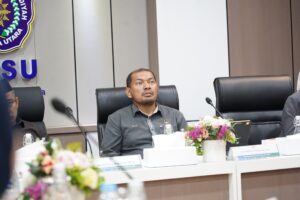
He also expressed hope that the quality of UMSU’s English-language scientific publications would continue to improve, increasing their chances of meeting international indexing standards, including Scopus.
Meanwhile, UniSZA KASTRO adviser and ESERI researcher Prof. Assoc. Ts. Dr. Roslan bin Umar welcomed the collaboration between UniSZA and UMSU. He described the agreement between the two institutions as an important opportunity to advance falak science and Islamic astronomy.
“This collaboration creates extensive opportunities for research development, knowledge exchange, and academic programs that benefit both institutions,” said the UniSZA KASTRO adviser.
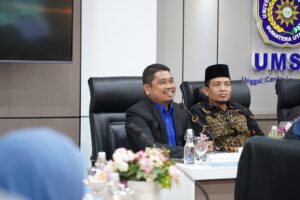 He noted that the falak science developed by OIF UMSU has distinctive characteristics, integrating Islamic perspectives, history, and civilisation with an astronomical approach. This provides significant potential for research that addresses community needs and advances scientific knowledge.
He expressed hope that the partnership would extend beyond the signing of a Memorandum of Understanding (MoU) and lead to concrete initiatives, including joint research, scientific publications, student exchanges, and international academic activities.
Earlier, OIF UMSU Head Assoc. Prof. Dr. Arwin Juli Rakhmadi Butar-Butar, M.A., explained that the observatory’s development of falak science is guided by its motto, “Observing the Universe for Faith and Civilisation.” This principle underpins OIF UMSU’s educational programs, research activities, and scientific development initiatives.
Dr. Arwin explained that OIF UMSU currently focuses on four main research areas: the beginning of Hijri months and crescent moon sighting; dawn phenomena and Fajr prayer times; the development of a Unified Global Hijri Calendar; and the measurement and determination of the Qibla direction.
“In research on the beginning of Hijri months, OIF UMSU has compiled more than seven years of research data. Meanwhile, research on dawn and Fajr prayer times uses instruments such as the Sky Quality Meter (SQM) and other observation equipment. For determining the Qibla direction, OIF UMSU uses various instruments, including theodolites, Mizwala devices, GPS, compasses, and other measuring tools,” he said.
The OIF UMSU Head emphasised that UMSU and UniSZA had established a partnership some time ago, with their collaboration in falak science among the most intensive joint initiatives.
“We are ready to strengthen our collaboration with UniSZA in research, journal publications, and other academic activities. We hope this partnership will continue through concrete programs that benefit both institutions,” he said.
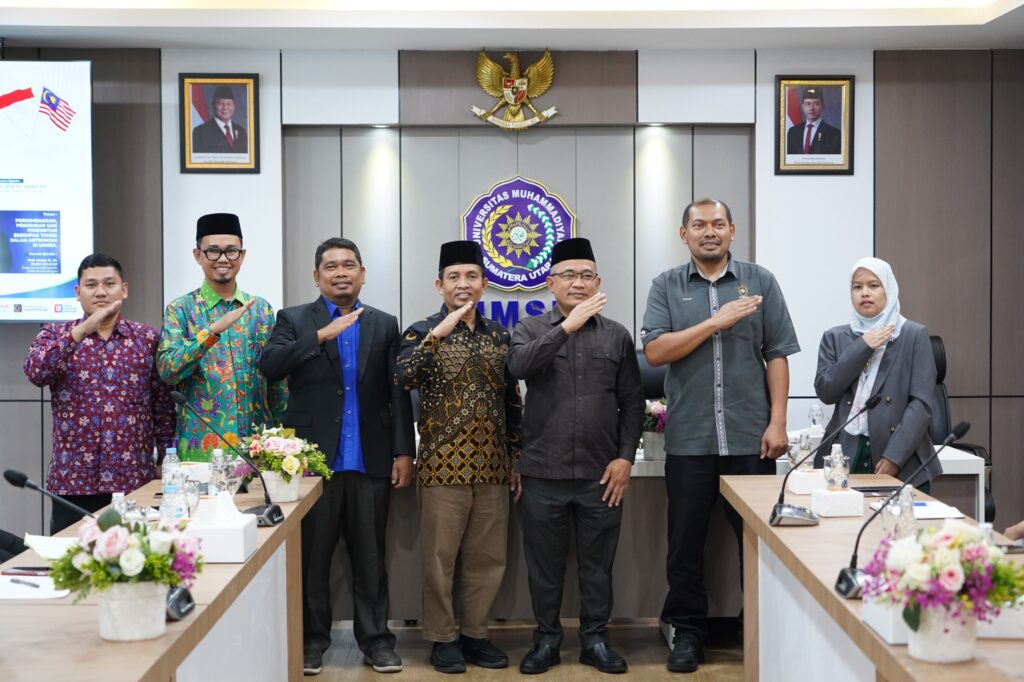
Meanwhile, Dean of the UMSU Faculty of Islamic Studies, Assoc. Prof. Dr. Zailani, M.A., welcomed the symposium, describing it as relevant to the needs of higher education, particularly in broadening academic perspectives and improving human resource competencies through international collaboration.
“We would like to thank our colleagues from UniSZA for visiting UMSU with their delegation. This is a highly valuable program that meets our needs. We hope to develop more collaborative activities in the future to improve the quality of human resources, including both students and lecturers,” he said.
The event continued with a keynote speech by Prof. Assoc. Ts. Dr. Roslan bin Umar titled “Developments, Education, and High-Impact Publications in Astronomy at UniSZA.”
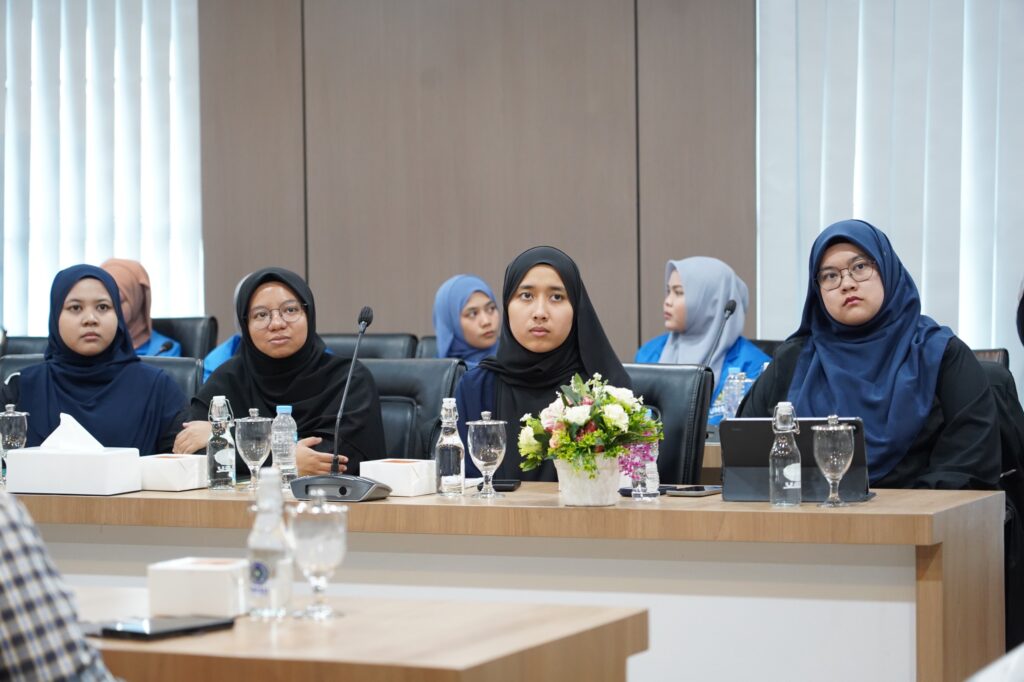
The symposium also provided a platform for academics and students to share their research findings on various topics, including Islamic astronomy education on social media, Fajr prayer time determination, investigations into true dawn, the use of artificial intelligence in crescent moon imaging, improving crescent visibility in images, and observatory-based education and falak science literacy.
The event was attended by UniSZA lecturers Prof. Assoc. Dr. Roslan bin Umar and Dr. Sharifah Nurul Aisyah, vice deans of the UMSU Faculty of Islamic Studies, OIF UMSU students, and UniSZA master’s and doctoral students.


