


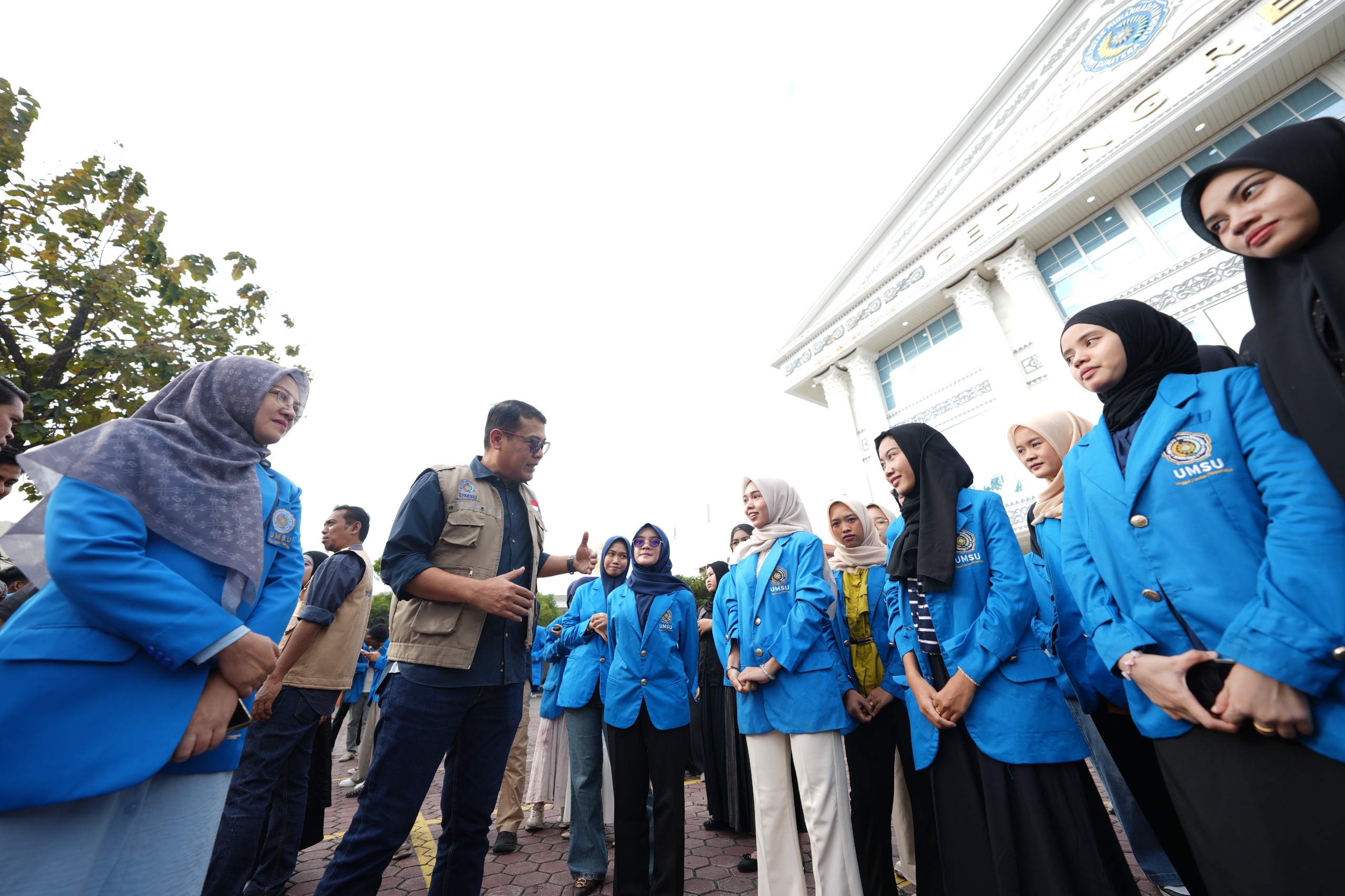
Universitas Muhammadiyah Sumatera Utara (UMSU) officially deployed five teams of lecturers and student organizations selected for the 2026 funding program titled “Mahasiswa Berdampak: Community Empowerment in Post-Disaster Recovery in Sumatra”, organized by the Ministry of Higher Education, Science, and Technology. The send-off ceremony took place at the UMSU campus courtyard on Jalan Muchtar Basri No. 3, Medan, Saturday (January 30).
 The teams were formally released by UMSU Rector Prof. Dr. Agussani, M.AP., represented by Vice Rector III, Assoc. Prof. Dr. Rudianto, M.Si. In his remarks, Vice Rector III expressed appreciation for the supervising lecturers and students who successfully secured the competitive grants.
He highlighted UMSU’s strong track record in disaster response, noting that since the onset of previous disasters, the university has consistently deployed teams and implemented effective emergency response programs.
“Thanks to our resilience, we have once again been entrusted with five funded programs. These initiatives must be executed promptly. I urge the teams already in motion to proceed immediately to avoid any obstacles,” he stated.
The five teams will conduct community service programs in five locations: one in Sibolga, two in Langkat, and two in Aceh Tamiang. He emphasized that actual disaster conditions are often far more complex than portrayed in the media.
“I hope the presence of our students will genuinely assist communities without creating new challenges,” he added.
Assoc. Prof. Rudianto further explained that UMSU has been entrusted as the disaster recovery coordination center of Pimpinan Pusat Muhammadiyah and is part of the One Muhammadiyah One Response movement.
“Through this role, UMSU is committed to remaining present until communities fully recover from the impacts of disaster,” he affirmed.
Earlier, the Head of UMSU’s Institute for Research and Community Service (LPPM), Assoc. Prof. Dr. Muhammad Fitra Zambak, S.T., M.Sc., noted that the selected locations urgently require the presence and tangible contributions of higher education institutions.
“We hope this initiative will bring positive outcomes and real benefits for the affected communities,” he said.
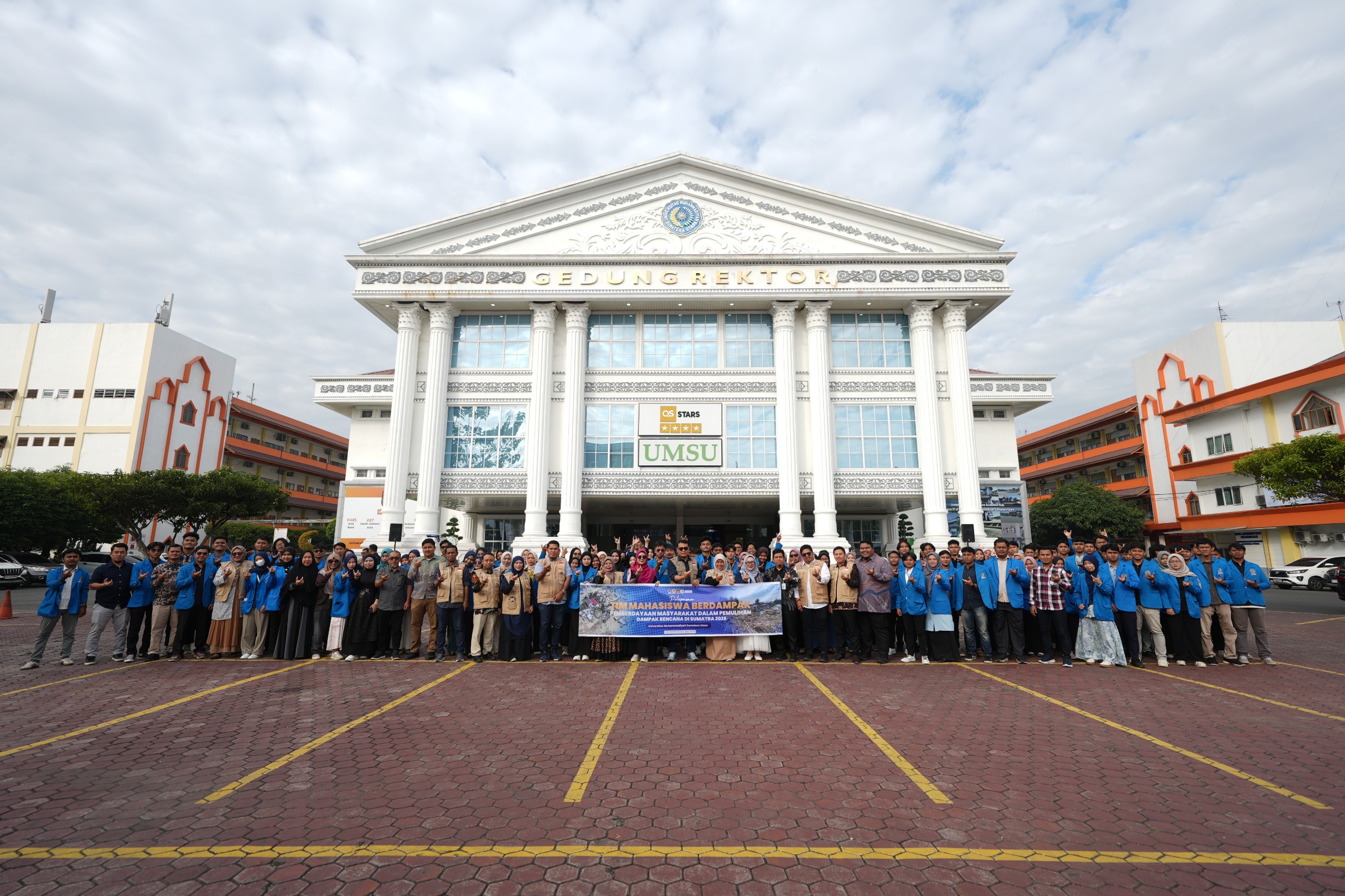
Meanwhile, SRCC Chair Fatimah Sari Siregar, S.Pd., M.Hum., explained that the proposal preparation process was completed within just four days. Despite the limited time, she praised the determination of supervising lecturers and the resilience of participating students.
“We observed remarkable perseverance among participants, along with sharp problem analysis and innovative solutions. Field deployment will begin in February. SRCC will continue to provide mentoring and evaluation,” she stated.
The five participating student organizations include the Agribusiness Student Association (Himagri), the Accounting Education Student Association, the English Education Student Association, the IMM Student Executive Board of the Faculty of Medicine and Health Sciences (FKIK), and the Development Economics Student Association—each accompanied by designated supervising lecturers.
The event was also attended by the Head of the Student Affairs Bureau, vice deans from several faculties (Education, Engineering, Medicine and Health Sciences, Law, and Economics and Business), supervising lecturers, and student participants of the program.


