


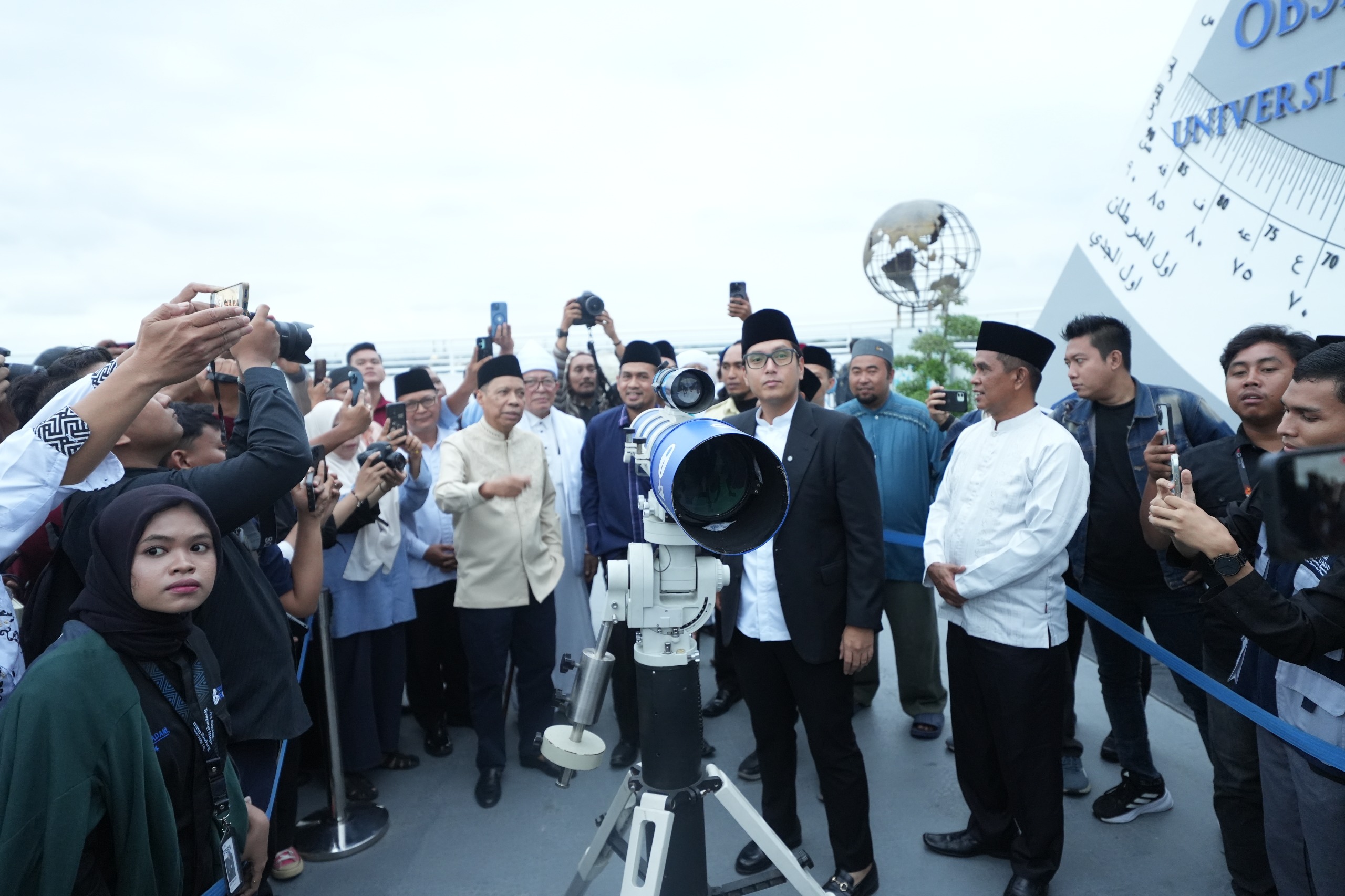
The Medan City Government once again collaborated with the Observatory of Islamic Astronomy (OIF) of Universitas Muhammadiyah Sumatera Utara (UMSU) to conduct a rukyatul hilal (crescent moon observation) to determine the beginning of Ramadan 1447 Hijri. The observation took place on Jalan Denai No. 217, Tegal Sari Mandala II, Medan Denai District, on Tuesday (February 17) afternoon.
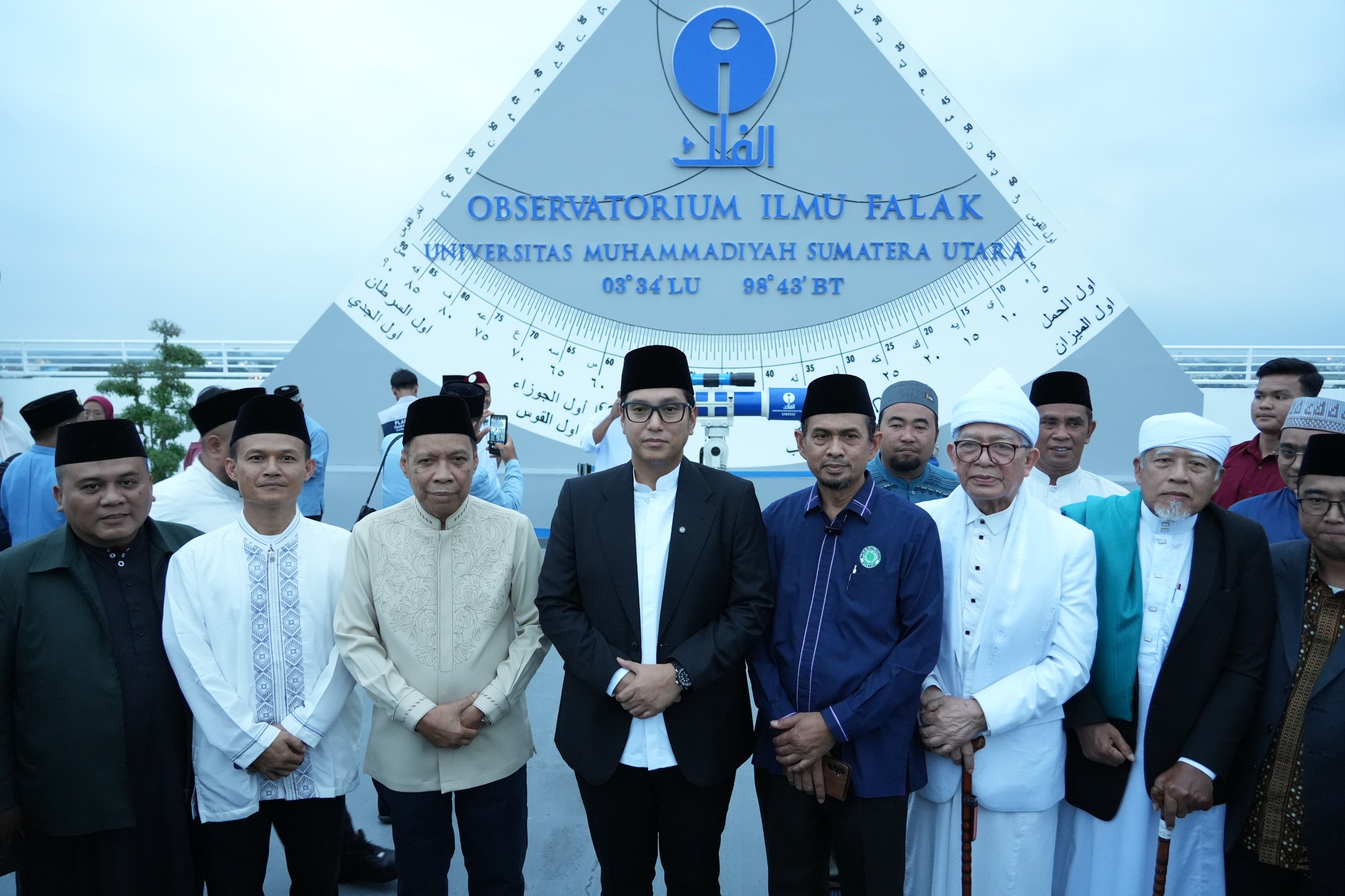
 OIF UMSU is one of 73 national hilal observation centers across Indonesia. Among those in attendance were the Mayor of Medan, Rico Tri Putra Bayu Waas; UMSU Rector Prof. Dr. Agussani, M.AP.; Chairman of the Indonesian Ulema Council (MUI) Medan, Dr. H. Hasan Matsum, M.Ag.; Head of the Ministry of Religious Affairs Office of Medan, Dr. H. Impun Siregar, M.A.; prominent Islamic scholar Buya Dr. KH Amiruddin, M.S.; Chairman of Muhammadiyah’s Medan Branch (PDM), Maulana Siregar, M.A.; and leaders of Islamic organizations across Medan.
In his remarks, Mayor Rico Waas urged the public to maintain harmony should differences arise regarding the beginning and end of Ramadan.
“We call on all residents of Medan to remain respectful and maintain unity if there are differences in determining the start and end of Ramadan. Ultimately, what matters most is the essence of worship, not debate,” he stated.
The event also featured presentations on the crescent observation methods employed by Muhammadiyah and the Government.
Head of OIF UMSU, Dr. Arwin Juli Rakhmadi Butar-Butar, explained that Muhammadiyah has determined that 1 Ramadan 1447 H will fall on February 18, 2026.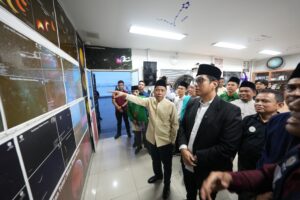
“Starting this year, Muhammadiyah has shifted from the wujudul hilal method to the Global Unified Hijri Calendar (KHGT) with the principle of one day, one date worldwide. The goal is to unify the Islamic calendar and time system globally,” he said.
He added that KHGT was formulated during an international congress in Turkey attended by representatives from 80 countries.
“KHGT is based on astronomical calculation (hisab imkan rukyat), requiring a minimum crescent altitude of 5 degrees and an elongation of 8 degrees. Globally, the criteria have been met—for example, in Alaska, USA, at 19:01 Western Indonesia Time, the crescent reached 5.8 degrees, fulfilling the requirement. Therefore, tonight we begin tarawih prayers, and tomorrow Muslims will start fasting,” he explained.
Meanwhile, Head of the Geophysics Station of the Meteorology, Climatology, and Geophysics Agency (BMKG), Sugeng, S.Tr.Geof., presented the astronomical position of the crescent in Indonesia, particularly in Medan.
“Today, the crescent is below the horizon in Medan, at minus 1.04 degrees. Tomorrow it will reach 9.79 degrees,” he stated.
Based on these conditions, he concluded, “Today the crescent is impossible to observe in Indonesia, but it will be observable tomorrow.”
Chairman of MUI Medan, Dr. H. Hasan Matsum, M.Ag., and Head of the Ministry of Religious Affairs Office of Medan, Dr. H. Impun Siregar, also urged residents to respect any differences in determining the start of Ramadan.
Earlier, Rector Prof. Agussani described the event as a demonstration of collaboration among Islamic organizations in Medan.
“Today reflects strong collaboration among Islamic institutions in Medan. Muhammadiyah operates three OIF centers—at UMSU, at Universitas Ahmad Dahlan, and at Muhammadiyah University of Makassar,” he noted.
Since its establishment, OIF UMSU has welcomed more than 120,000 visitors, including domestic and international researchers, community members, and school students.
Since 2017, the Medan City Government has routinely conducted crescent observations at OIF UMSU at the start of Ramadan each year. UMSU has also opened an Islamic Astronomy Study Program, recognizing the limited number of experts in this specialized field.


