


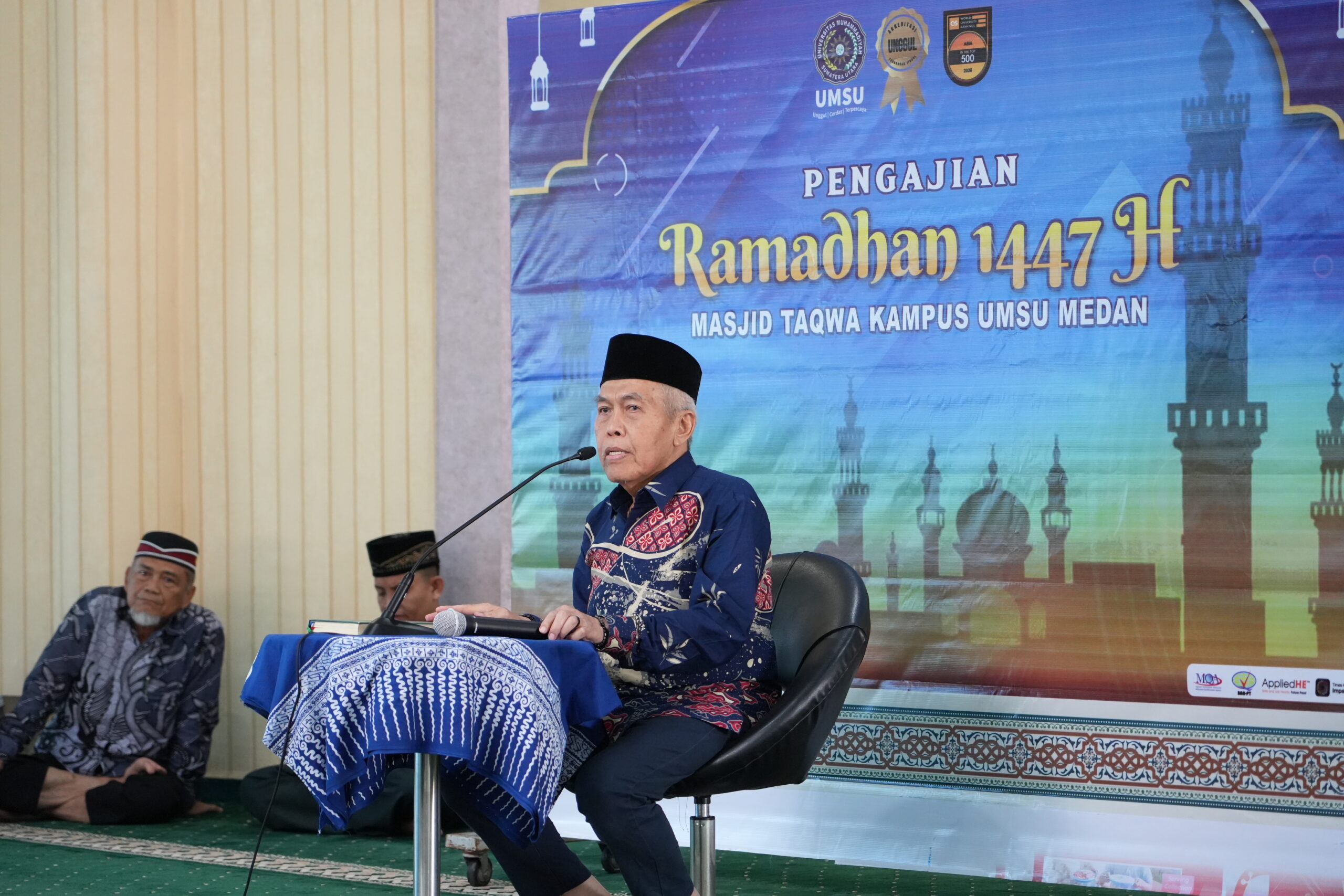
Universitas Muhammadiyah Sumatera Utara (UMSU) officially opened its annual Ramadan 1447 H Islamic study session on Monday (February 23) at the Taqwa Mosque, Jalan Muchtar Basri No. 3, Medan. The event was inaugurated by Vice Rector I, Prof. Dr. Muhammad Arifin, M.Hum., representing UMSU Rector Prof. Dr. Agussani, M.AP.
 The Ramadan study session is held annually during the holy month, featuring distinguished speakers from Muhammadiyah who deliver sermons and short religious lectures.
In addition to the Ramadan program, Taqwa Mosque UMSU regularly organizes weekly activities, including Cahaya Senja (Evening Reflection) attended by 100 students, Monday–Thursday iftar gatherings with complimentary takjil (light refreshments), Jum’at Berkah (Blessed Friday initiative), and ba’da dzuhur study sessions every Tuesday and Thursday.
In the first week, the lecture was delivered by the Chairman of Pimpinan Wilayah Muhammadiyah Sumatera Utara (PWM North Sumatra), Prof. Dr. Hasyimsyah Nasution, M.A., under the theme “Understanding Bayani, Burhani, and Irfani.”
The event was attended by the university’s vice rectors, faculty leaders, lecturers, academic community members, and students.
Vice Rector I Prof. Arifin formally opened the session with the basmalah. In his remarks, he encouraged participants to take full advantage of the Ramadan study sessions as a means to strengthen faith (iman) and piety (taqwa).
“Let us participate wholeheartedly and set aside time to benefit from these lectures. Hopefully, they will provide meaningful insights. We also expect faculty leaders, heads of study programs, and education staff to take part in this activity,” he stated.
The lecture session, moderated by the Vice Dean I of the Faculty of Law, Assoc. Prof. Dr. Zainuddin, S.H., M.H., featured Prof. Hasyimsyah’s explanation of the concepts of Bayani, Burhani, and Irfani.
“Bayani, Burhani, and Irfani all end with the letter ‘i,’ indicating attributes. Bayani means clarity—something that is already clearly established. In Islam, the Qur’an and Hadith serve as the primary and clear references,” he explained.
According to Prof. Hasyimsyah, before reaching the level of Irfani (spiritual insight), one must first understand Bayani as a foundation of clear textual understanding. Anyone seeking to truly comprehend the Qur’an, he added, must approach it with deep self-awareness and clarity.
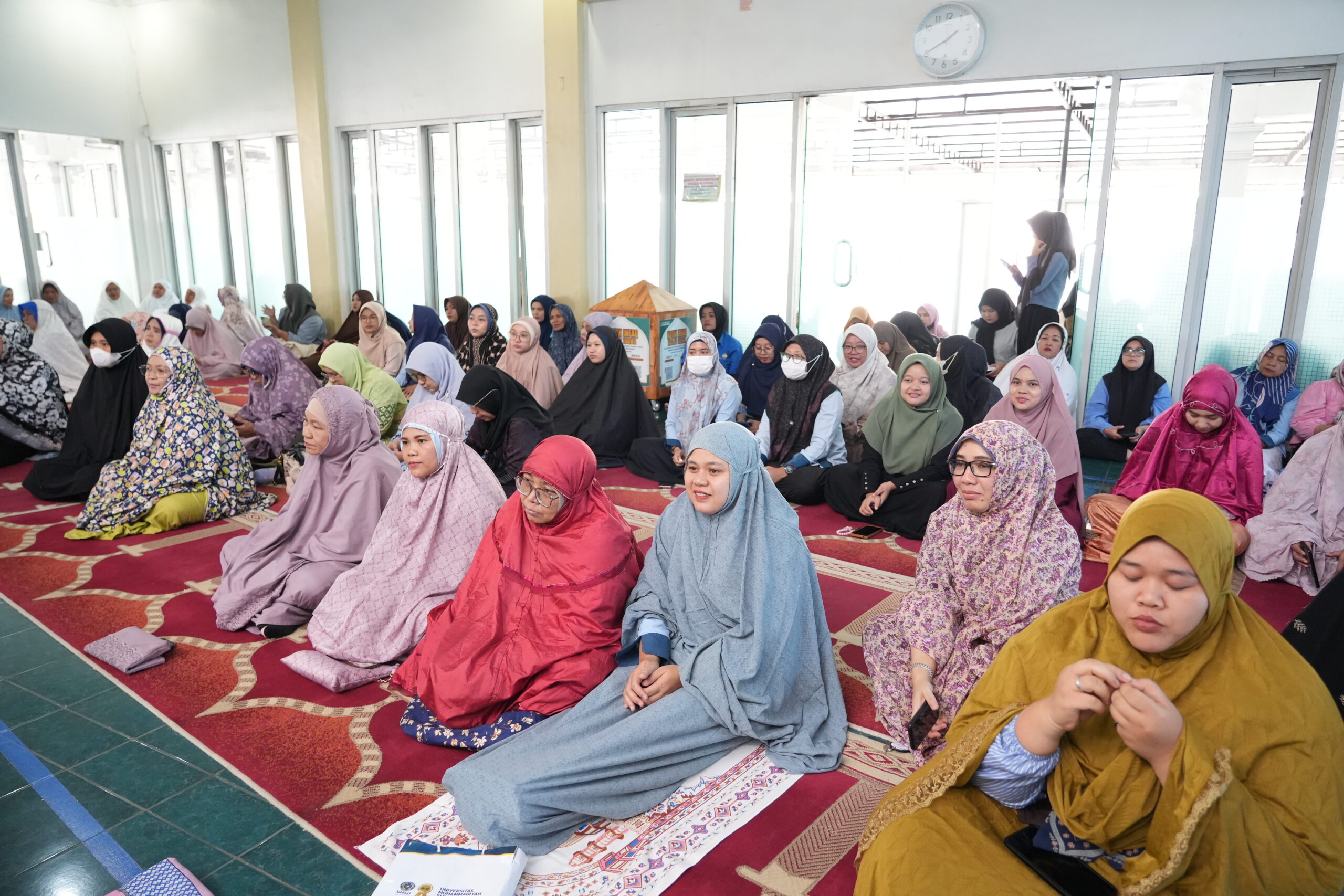
Earlier in the event, a charitable initiative (gerakan amal saleh) led by Dr. Muhammad Ruslan, M.Pd., Head of the Early Childhood Islamic Education Program (PIAUD) at the Faculty of Islamic Studies, successfully raised Rp2,000,000 in donations.
The Ramadan study session concluded with a question-and-answer discussion.


