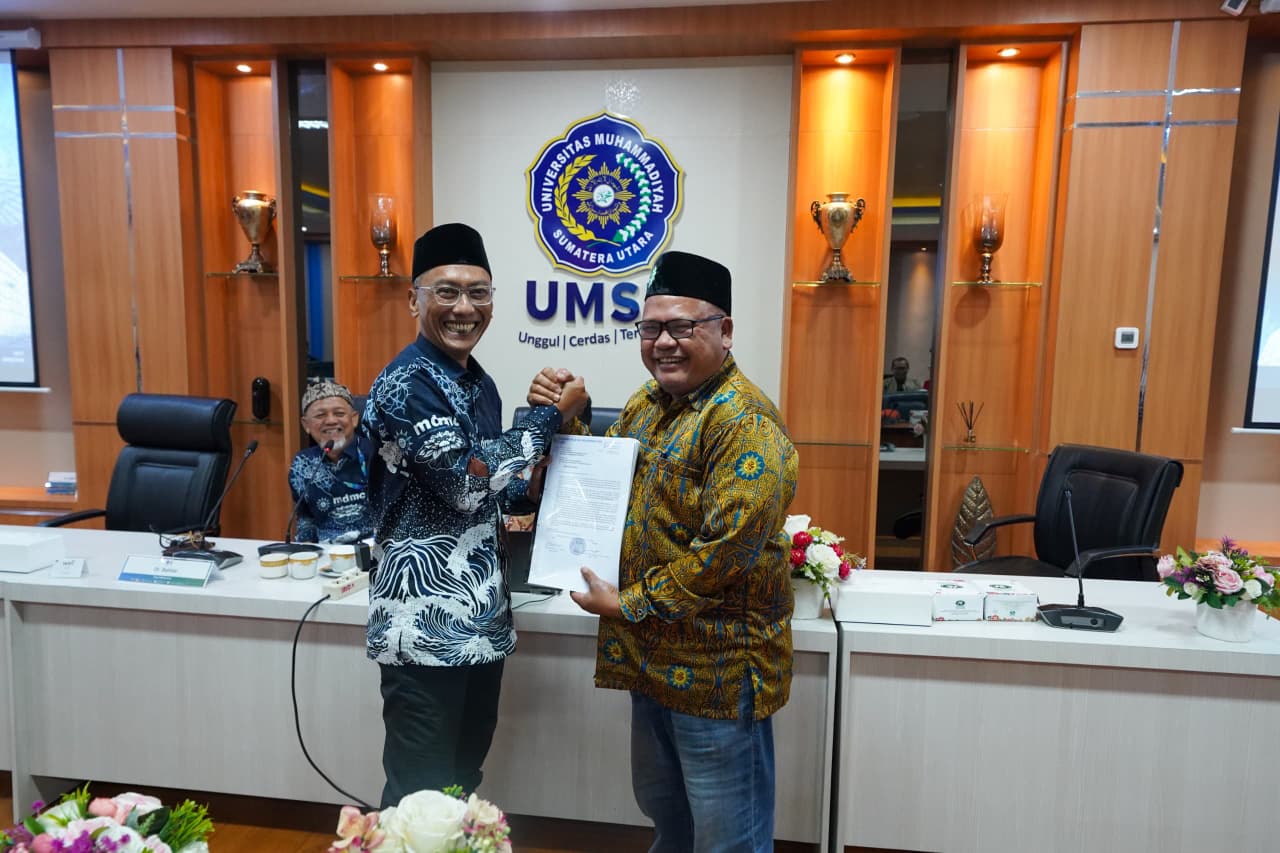
Universitas Muhammadiyah Sumatera Utara (UMSU) hosted the “Workshop on the Integration of Collaborative Action Plans of Muhammadiyah Councils, Institutions, and Autonomous Organizations for the Post–Emergency Rehabilitation and Reconstruction Program in Sumatra (Aceh, North Sumatra, West Sumatra) – POSKORNAS PP Muhammadiyah.” The event was held at the VIP Meeting Room on Jalan Muchtar Basri No. 3, Medan, Tuesday (February 10).
 At the workshop, the Chairman of Pimpinan Pusat Muhammadiyah (PP Muhammadiyah), dr. H. Agus Taufiqurrahman, Sp.S., M.Kes, expressed appreciation for the swift response of all Muhammadiyah elements in addressing the disaster.
“We extend our deepest gratitude for the extraordinary efforts demonstrated throughout this disaster response. What the organization accomplished across the three provinces—supported by universities and the entire organizational structure—serves as a model for other institutions,” he stated.
He emphasized that Muhammadiyah’s humanitarian movement must be grounded in sincere intentions. “What we do is not for image-building, but for accountability—to ensure that the funds collected are truly distributed to those in need.”
Earlier, UMSU Rector Prof. Agussani, MAP, represented by Vice Rector III Dr. Rudianto, M.Si, reported that flash floods that struck several areas in North Sumatra—including Sekoici Village in Besitang District and Pantai Cermin Village in Tanjungpura District, Langkat Regency—had left significant impacts on local communities.
In response, UMSU deployed hundreds of volunteers through its disaster emergency response program to assist in recovery efforts.
“When we first arrived at the flood sites, the scenes were heartbreaking. The situation was chaotic. Many homes had been flattened, others swept away by the floods. Household belongings were scattered, vehicles abandoned, and some houses were buried in mud,” he explained.
Beyond physical destruction, the risk of post-flood diseases also increased. “Patients frequently presented with fever, cough, and respiratory distress caused by dried mud and poor ventilation in evacuation shelters. There were also cases of diarrhea due to contaminated water sources, with risks of severe dehydration. Additionally, leptospirosis—an infection transmitted through bacteria from rats—poses a serious threat and can damage vital organs,” he added.
As part of its commitment to the tridharma of higher education, four teams of UMSU lecturers and students implemented community partnership programs funded by the Ministry of Higher Education, Science, and Technology under the 2025 Sumatra Disaster Emergency Response Funding scheme. The initiatives included logistics distribution, healthcare services, clean water provision, and psychosocial assistance.

“The UMSU team has distributed essential aid to affected communities and provided medical services for those impacted by the disaster,” he said.
 Over the course of one month, UMSU mobilized approximately 300 personnel deployed across South Tapanuli, Sibolga, Central Tapanuli, Langkat, and Aceh Tamiang. In addition, around 70 doctors were placed on standby to support medical services in affected regions.
UMSU also received Rp1.6 billion in funding from the Ministry of Higher Education, Science, and Technology, allocated entirely for emergency response needs, including water storage tanks, well drilling, generator procurement, and installation of supporting facilities.
Meanwhile, the Chairman of Pimpinan Wilayah Muhammadiyah Sumatera Utara, Prof. Dr. H. Hasyimsyah Nasution, M.A., underscored the importance of effective management and coordination in disaster handling.
“A good cause, if not properly managed, can be overshadowed by falsehood. Therefore, strong coordination and accurate data collection are essential to ensure aid reaches the right beneficiaries,” he noted.

The workshop continued with panel sessions presenting reports on flood and landslide disaster responses in Sumatra (Aceh, West Sumatra, and North Sumatra), ongoing and upcoming programs by MDMC, presentations of the Jitupasna (Post-Disaster Needs Assessment) findings, and discussions on financial mechanisms supporting post-disaster recovery programs.